

Choosing the right tea box is not only about appearance. For retailers, Amazon sellers and private label brands, compartment layout, material, lid design, packaging and customization can all affect how well the product performs in the market.
Based on our experience developing bamboo and wooden tea boxes for different customers, some designs consistently perform better than others.
Here are the main points buyers should consider when developing a tea box collection.

1. How Many Compartments Should a Tea Box Have?
One of the first decisions is the number of compartments.
For most of our Amazon customers, 8-compartment tea boxes are currently the most popular option. They offer enough variety for different tea bags while keeping the overall box compact and easy to store.
12-compartment tea boxes are the second most popular choice. They provide more storage capacity and work well for customers who want to position the product as a larger tea organizer or gift item.
Other layouts, such as 10 compartments, can also work depending on the target market and packaging size.
For buyers developing a new product, we normally recommend balancing three factors:
- Number of tea varieties the customer wants to store
- Overall product size
- Target retail price
A larger number of compartments does not automatically make the product better. For many online customers, a compact and practical design can be easier to sell.

2. Natural Bamboo or Acacia Wood?
Material choice has a strong influence on both product positioning and price.
Natural Bamboo
Natural bamboo remains the most popular material among our tea box customers.
Its advantages include:
- Clean and natural appearance
- Easy to match with modern kitchens and tea stations
- Suitable for a wide range of retail price points
- Good choice for Amazon and mainstream retail collections
- Easy to customize with laser logos and different finishes
For most buyers looking for a versatile tea box, natural bamboo is usually the safest starting point.
Acacia Wood
Acacia wood has also become increasingly popular.
Compared with natural bamboo, acacia has richer grain patterns and a more premium visual appearance. Because every piece of wood has slightly different grain and color, the finished product often feels more distinctive.
We normally recommend acacia wood for brands targeting a higher-end or gift-oriented market.
It can work especially well with premium packaging, darker finishes and higher-value retail positioning.

3. Acrylic Lid, Glass Lid or Solid Wood Lid?
The lid material has a noticeable effect on both product positioning and cost.
Acrylic Lid
For most of our tea box projects, acrylic lids are the most common choice.
They provide a clear view of the tea bags inside while keeping the product relatively lightweight and practical for online retail.
Acrylic lids work especially well for:
- Amazon products
- Mainstream retail collections
- Tea stations
- Kitchen countertops
- Office use
- Gift-ready tea organizers
For buyers looking for a balance between appearance, functionality and cost, acrylic is usually the most practical option.
Glass Lid
Glass lids are more often used for premium-positioned tea boxes.
Compared with acrylic, glass provides a heavier and more refined feel, making it suitable for:
- Higher-end retail collections
- Premium gift products
- Hotels and hospitality
- Boutique tea brands
Because glass is heavier and more fragile, packaging protection becomes more important.
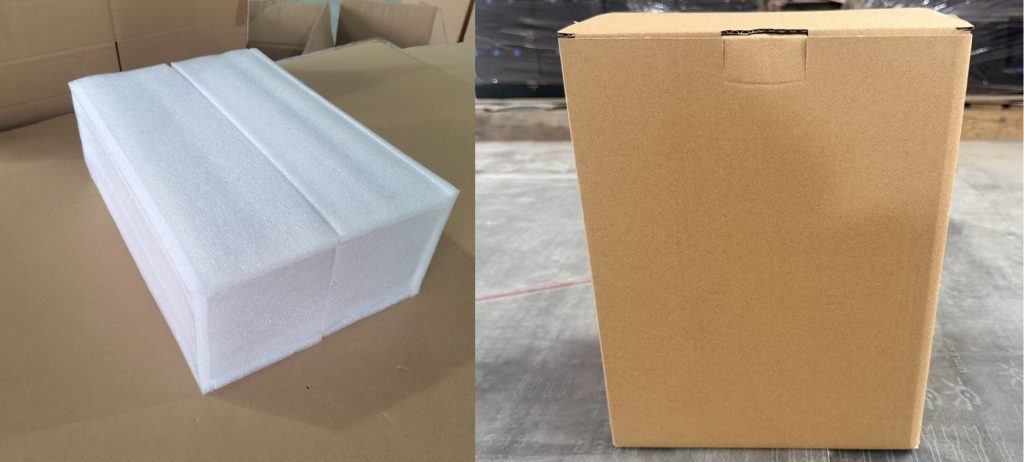
For glass lid tea boxes, we normally recommend using protective foam around the lid, followed by an individual inner box to reduce movement and protect the glass during transportation.

Solid Wood Lid
A solid bamboo or wooden lid can be a good option for buyers looking for a more traditional, simple or fully natural appearance.
It does not provide product visibility, but it can work well for minimalist or premium natural-wood collections.
4. Think About the Target Market Before Choosing the Design
Different customers need different tea box designs.
For Amazon sellers, we often see stronger demand for practical designs that are easy to understand from the product images.
An 8-compartment natural bamboo tea box with a clear acrylic lid, for example, is easy for shoppers to recognize immediately and offers a good balance between function, appearance and price.
For premium brands, hotel suppliers or gift collections, buyers may prefer:
- Acacia wood
- Glass lids
- Larger 10- or 12-compartment designs
- Premium hinges and hardware
- Darker finishes
- More sophisticated packaging
- Custom inserts or branded cards
The best design should match the customer’s retail positioning rather than simply adding more features.
5. Packaging Matters — Especially for Premium Lid Designs
Packaging should be considered during product development, not after the product is finished.
For standard acrylic lid tea boxes, suitable inner protection and an individual box are normally sufficient depending on the structure and shipping method.
For glass lid tea boxes, stronger protection is recommended. We normally use protective foam or similar cushioning around the glass lid before placing the product into the individual box.
The packaging should protect the product while still creating a clean unboxing experience.
Depending on the sales channel, packaging can also include:
- Kraft boxes
- Printed retail boxes
- Custom inserts
- Instruction or thank-you cards
- Barcode labels
- Amazon-ready packaging
For private label brands, packaging is often one of the easiest ways to differentiate a product from similar listings.
6. What Can Be Customized?
Tea boxes are highly suitable for OEM and private label development.
Common customization options include:
Logo
Laser engraving, printing or other branding methods can be applied depending on the design.
Dimensions
The overall size can be adjusted according to compartment quantity, tea bag size and target packaging dimensions.
Color and Finish
Natural bamboo, brown finish, darker finishes and other customized colors can be developed.
Material
Bamboo and acacia wood are both available depending on target price and positioning.
Lid Material
Acrylic, glass and solid bamboo or wood lids can be developed depending on the target market and price point.
Packaging
Inner boxes, printed packaging, inserts, barcode labels and branded packaging can all be customized.
Compartment Layout
The number and size of compartments can be adjusted according to the customer’s product concept.
For buyers developing their own tea box, it is usually better to finalize the target market and retail positioning first, then decide the material, compartment layout, lid type and packaging.
7. MOQ and Sample Development
For standard bamboo tea box projects, our usual MOQ is around 300 pieces.
For customized samples, the typical development time is around 7–10 days, depending on the design, logo and packaging requirements.
We normally recommend confirming the following before starting the sample:
- Product dimensions
- Number of compartments
- Material
- Lid material
- Finish
- Logo position and size
- Packaging requirements
Once these details are confirmed, the sample can provide a much more accurate reference for mass production.
Which Bamboo Tea Box Is Best for Your Market?
There is no single tea box design that works for every customer.
For mainstream Amazon and online retail markets, 8-compartment natural bamboo tea boxes with acrylic lids are currently one of the most popular and practical options.
For customers looking for a larger storage solution, a 12-compartment tea box can provide stronger visual impact and additional capacity.
For premium brands and gift collections, acacia wood and glass lid designs are worth considering because they create a more distinctive and higher-end presentation.
The most successful product is usually the one that matches the target customer, retail price and sales channel — rather than simply offering the largest size or the most features.
If you are developing a bamboo or wooden tea box for your own brand, Pureliving supports OEM and private label projects with customized materials, dimensions, lid options, finishes, logos and packaging.
You can also explore our bamboo tea box collection for different compartment layouts and design options.