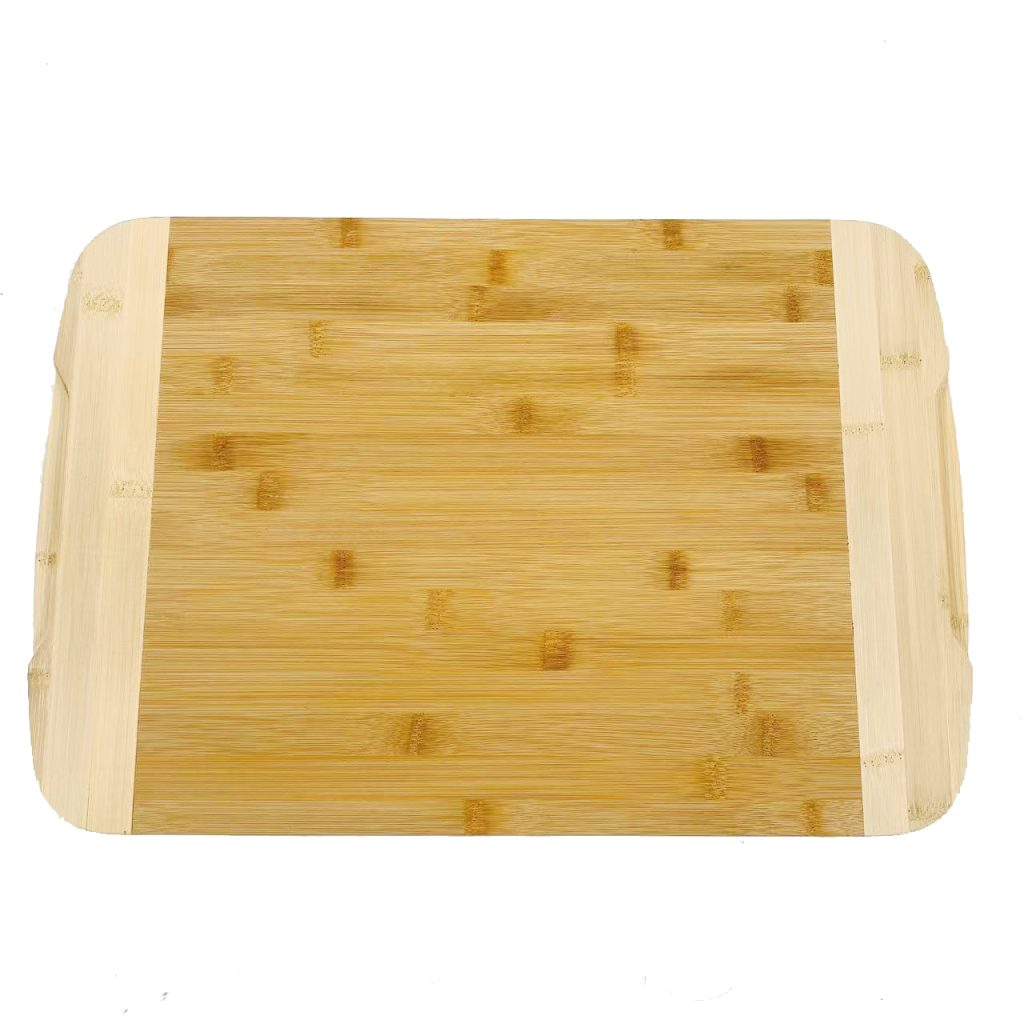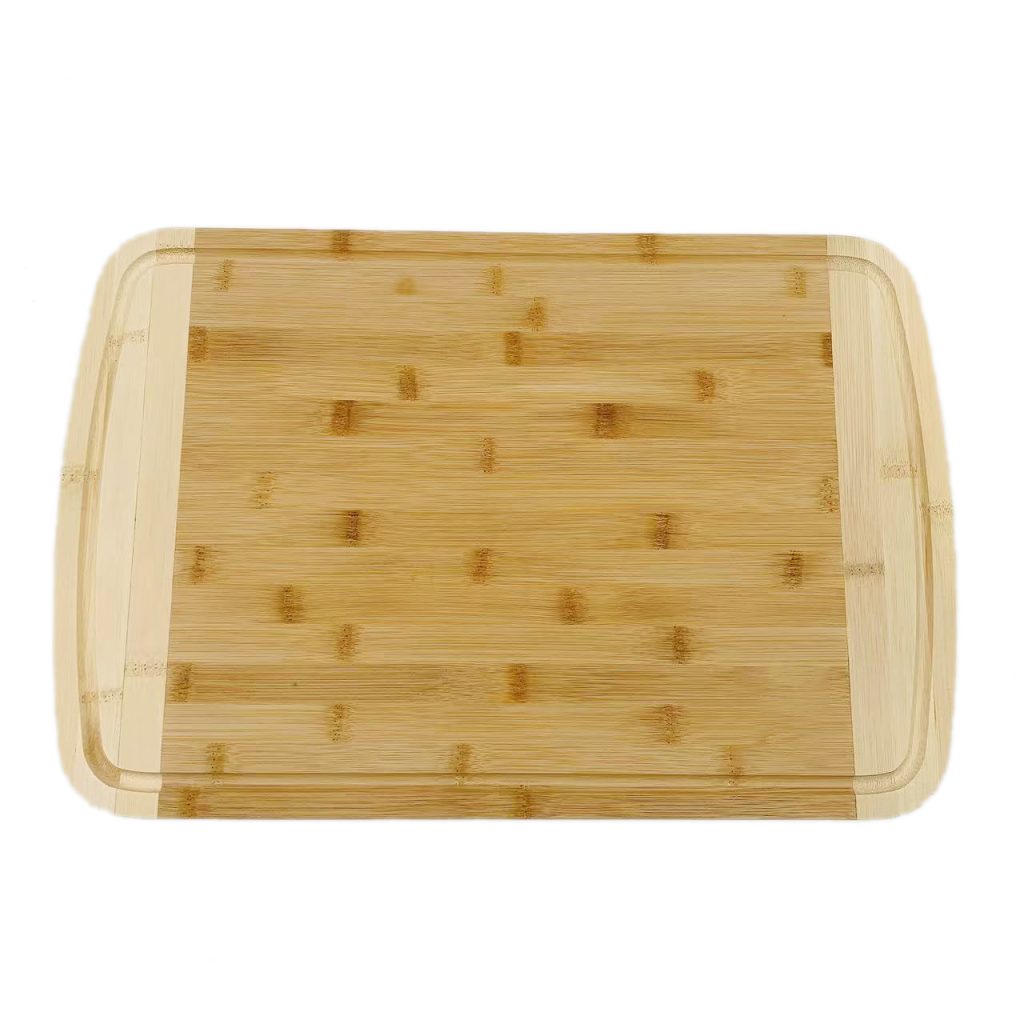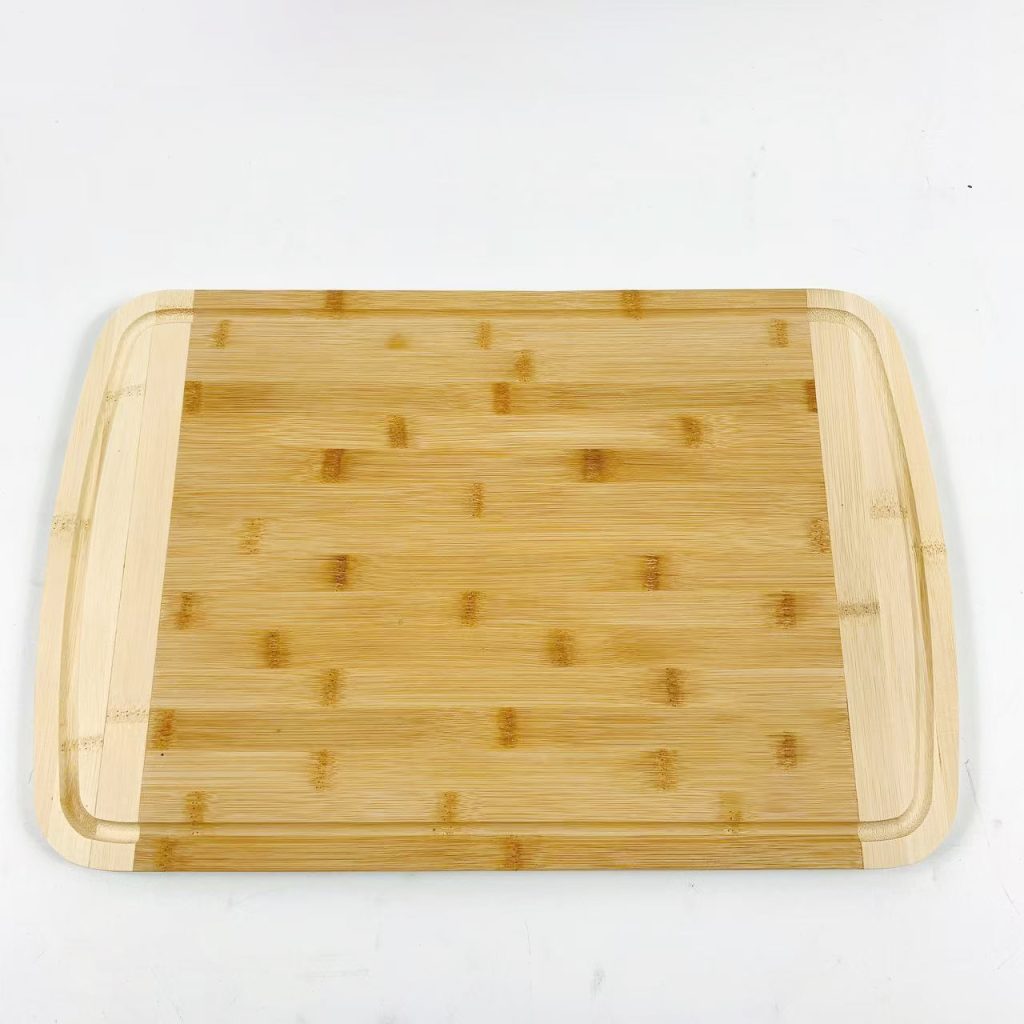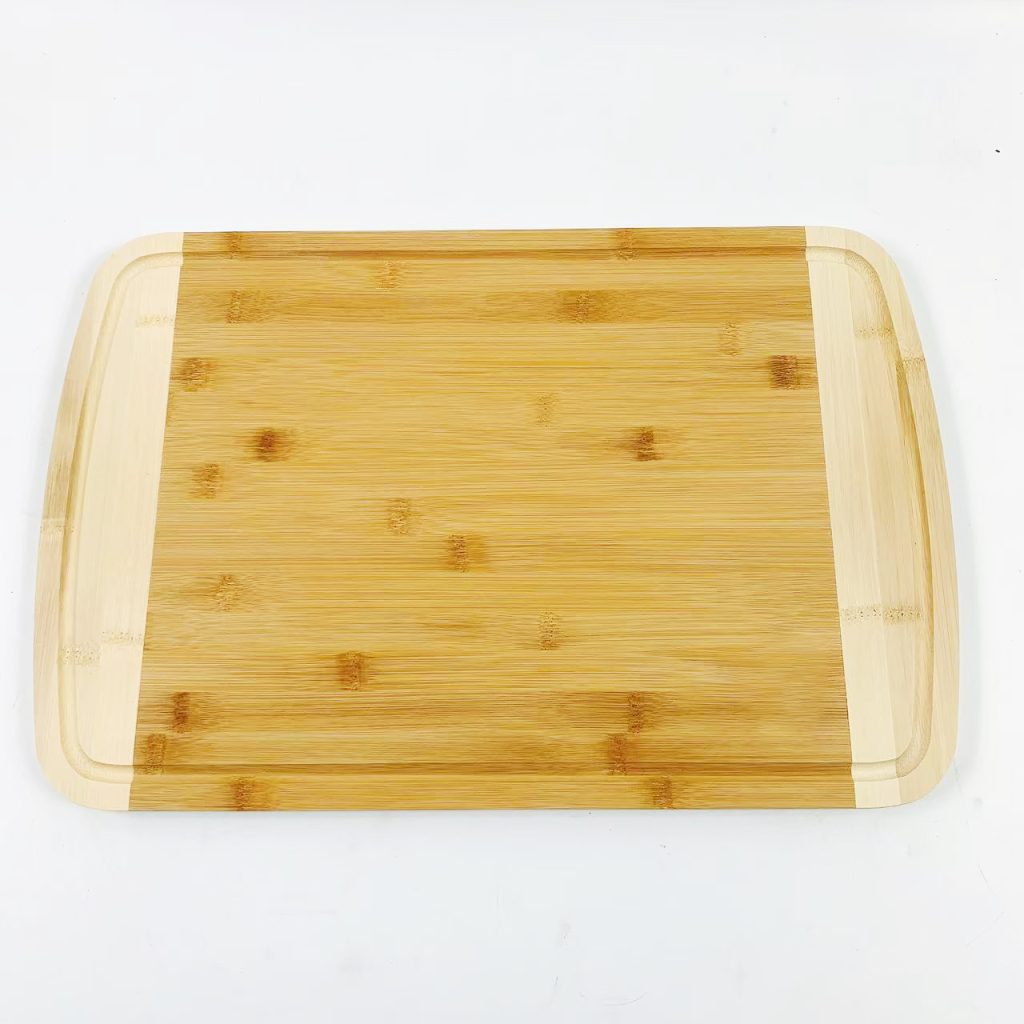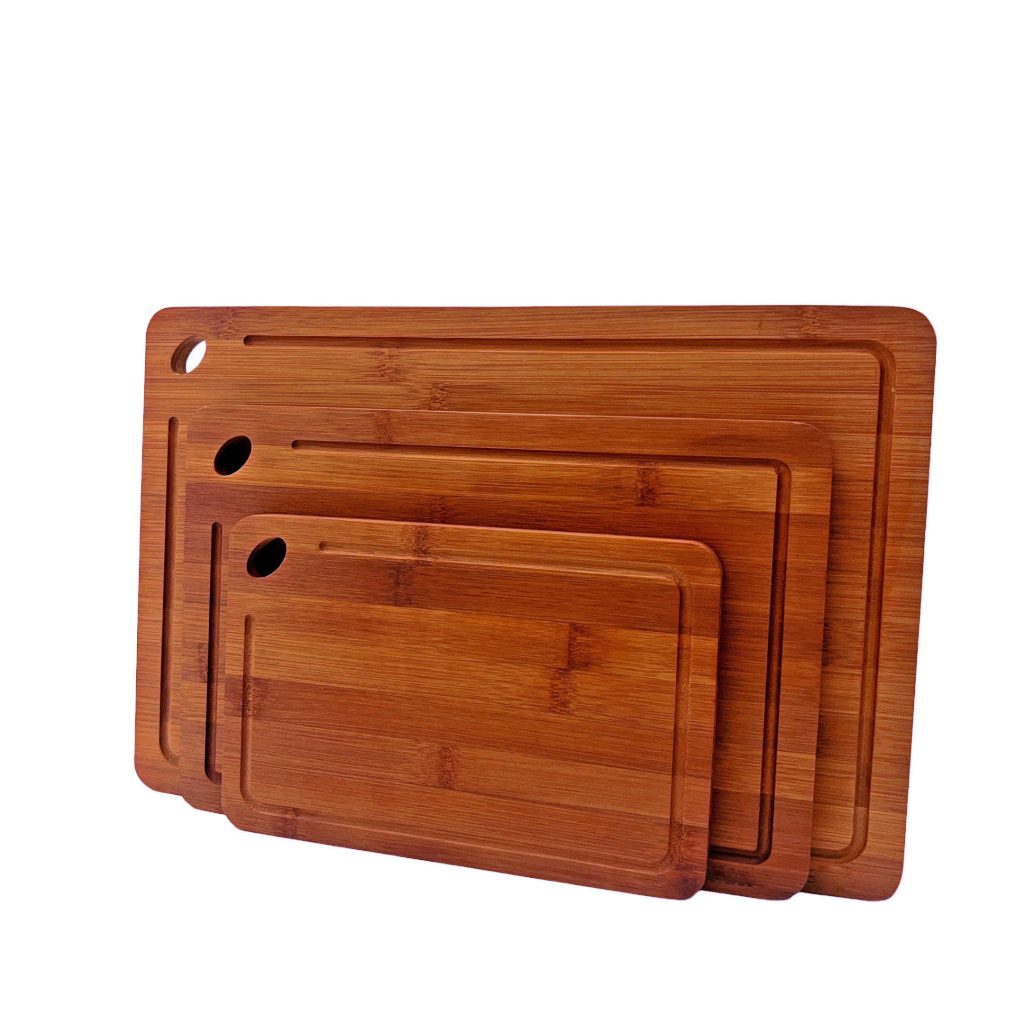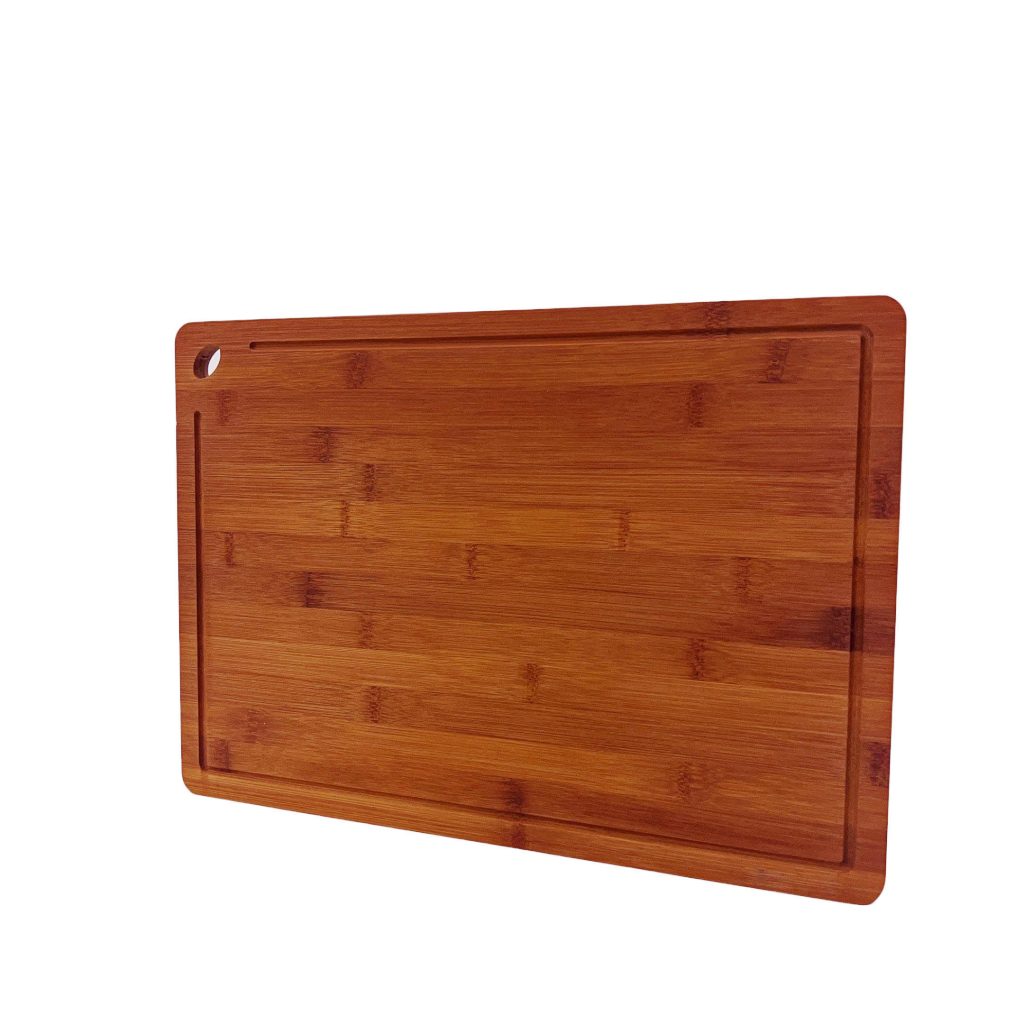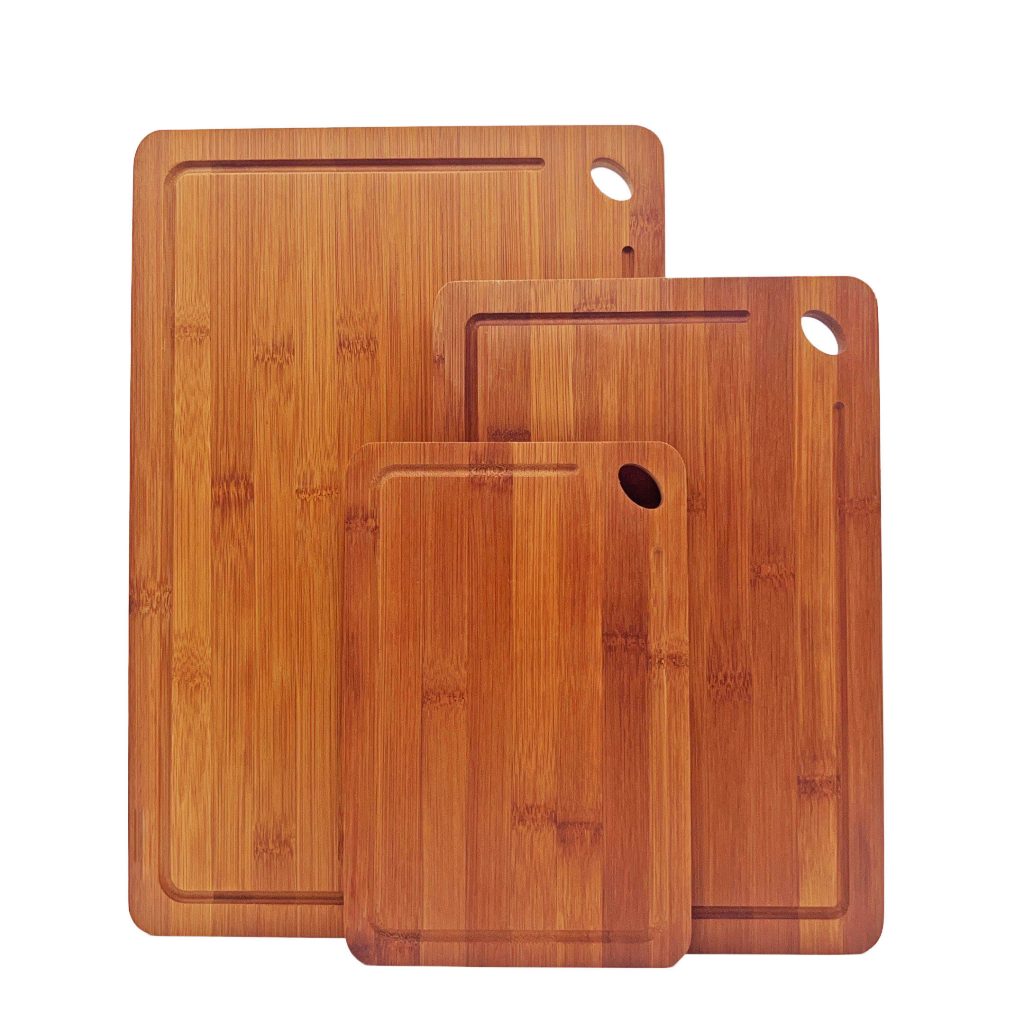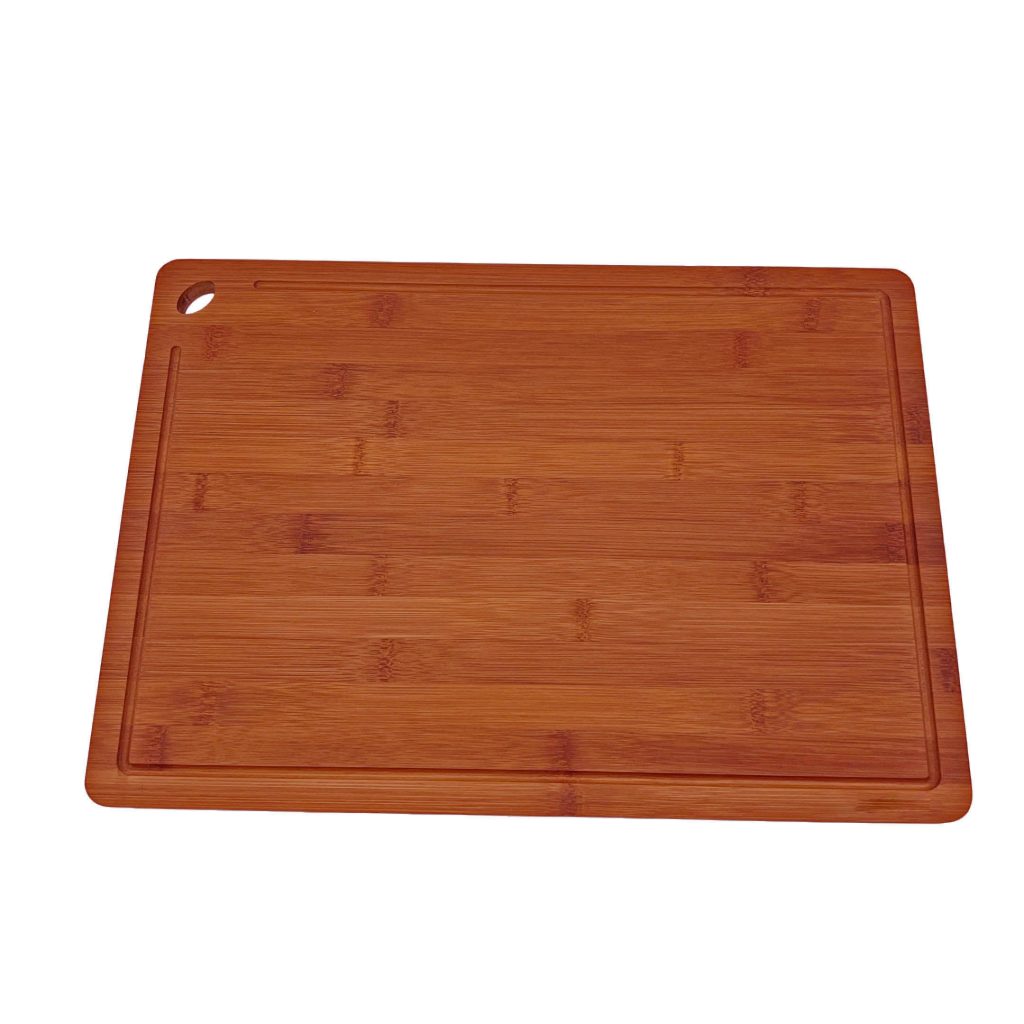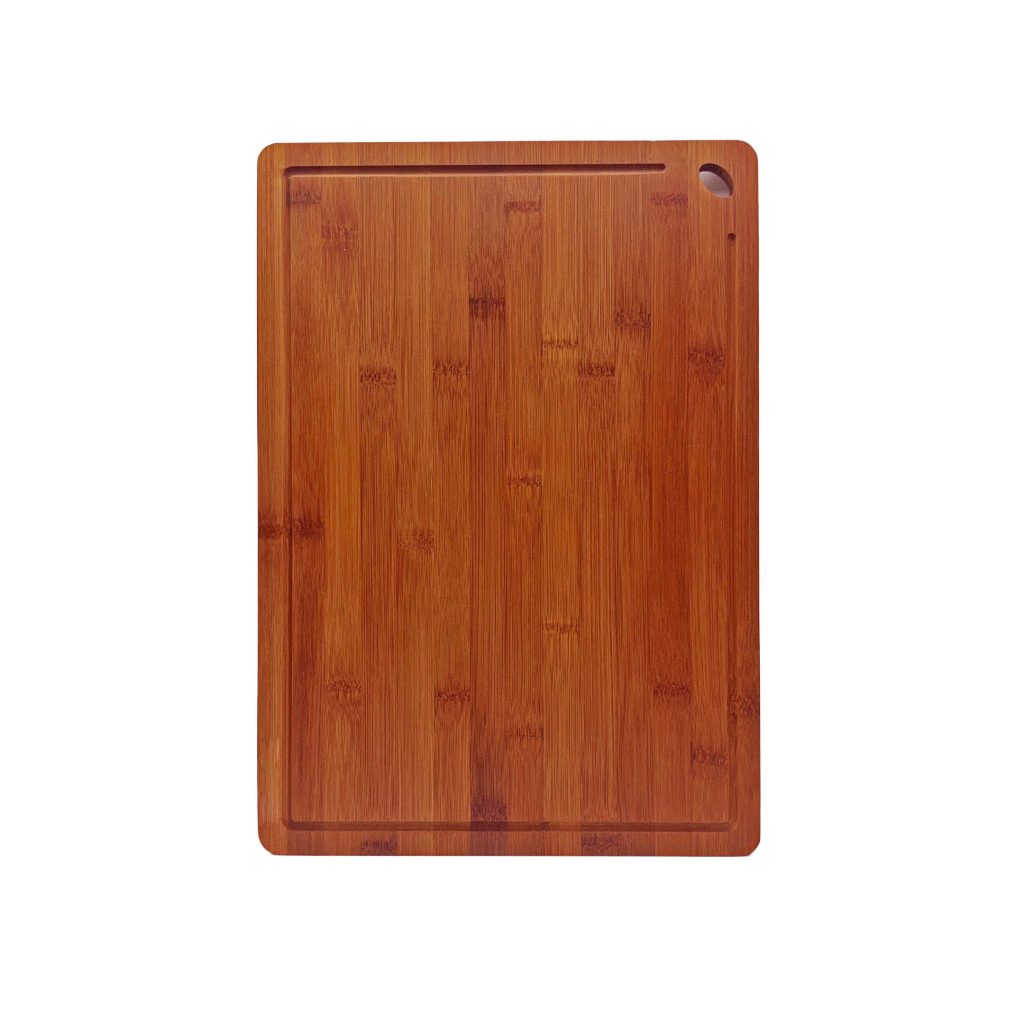

Bamboo and acacia are both popular materials for cutting boards, but they suit different product positions.
Choose bamboo when you need a cost-effective, sustainable option for everyday kitchen collections. Choose acacia when your brand is targeting a more premium, natural-wood look.
If you’re sourcing cutting boards for retail or private label programs, explore our bamboo and acacia cutting board collection with custom sizes, finishes and packaging options.
What Is a Bamboo Cutting Board?
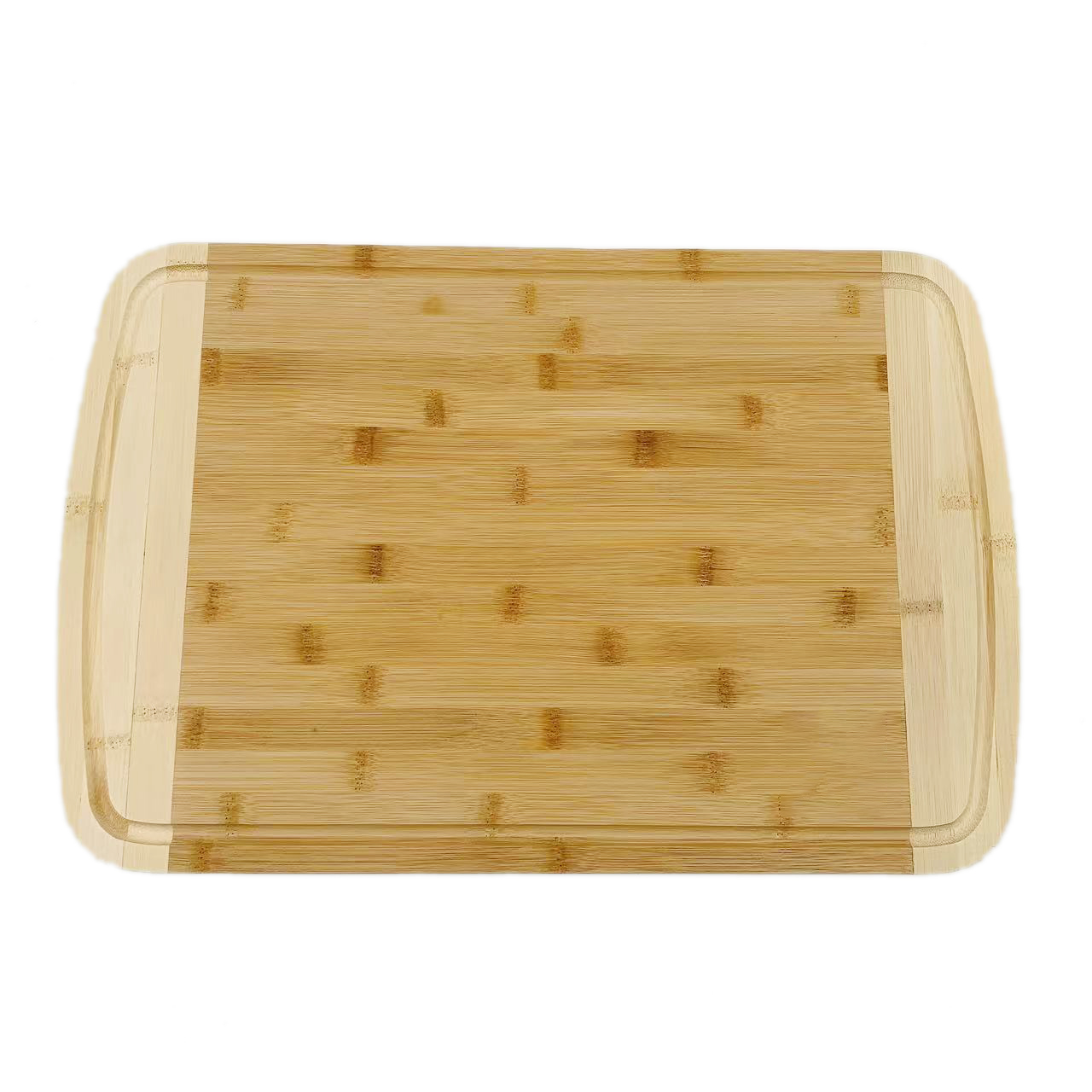
Bamboo is technically a grass rather than a hardwood, but after processing under high pressure, it becomes an exceptionally strong and durable material suitable for kitchen products.
High-quality bamboo cutting boards are made by laminating multiple strips together with food-safe adhesives before sanding and finishing.
Advantages
- Fast-growing renewable resource
- Lightweight but durable
- Smooth surface
- Affordable
- Consistent color and grain
- Excellent for mass production
What Is an Acacia Cutting Board?


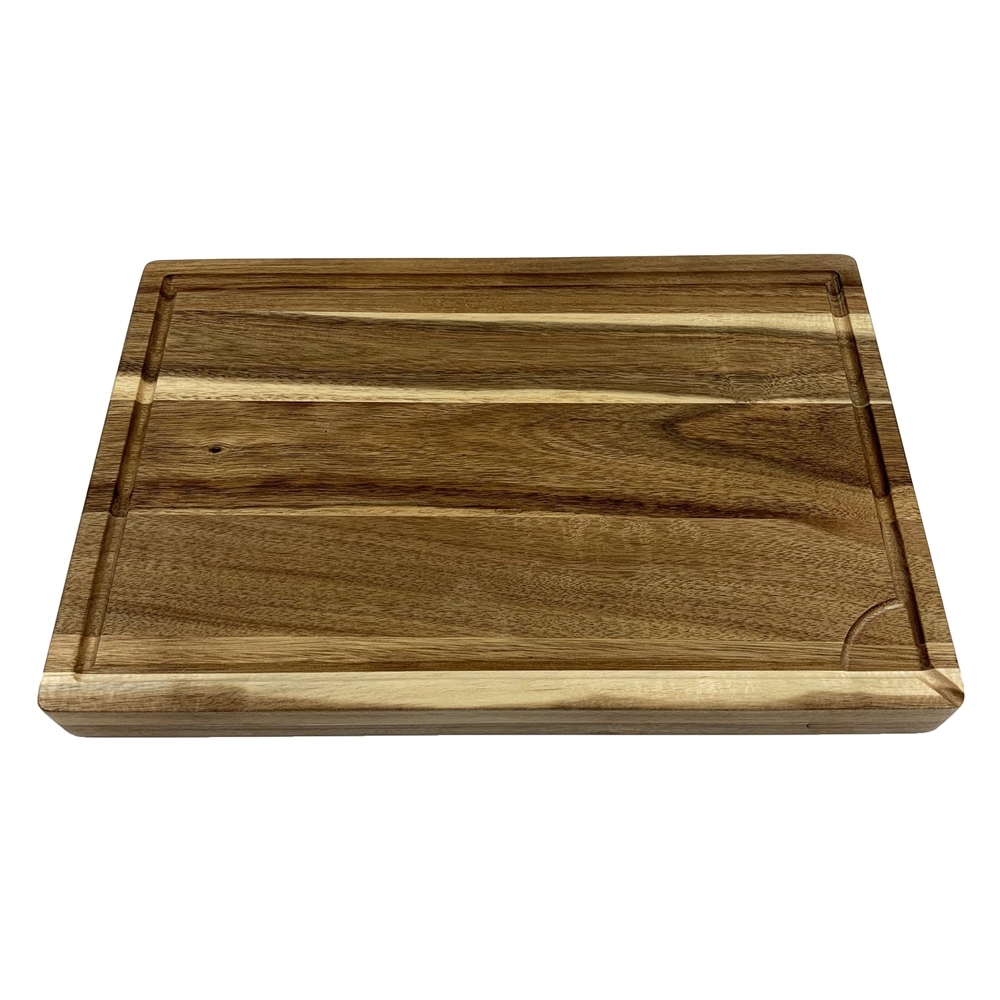


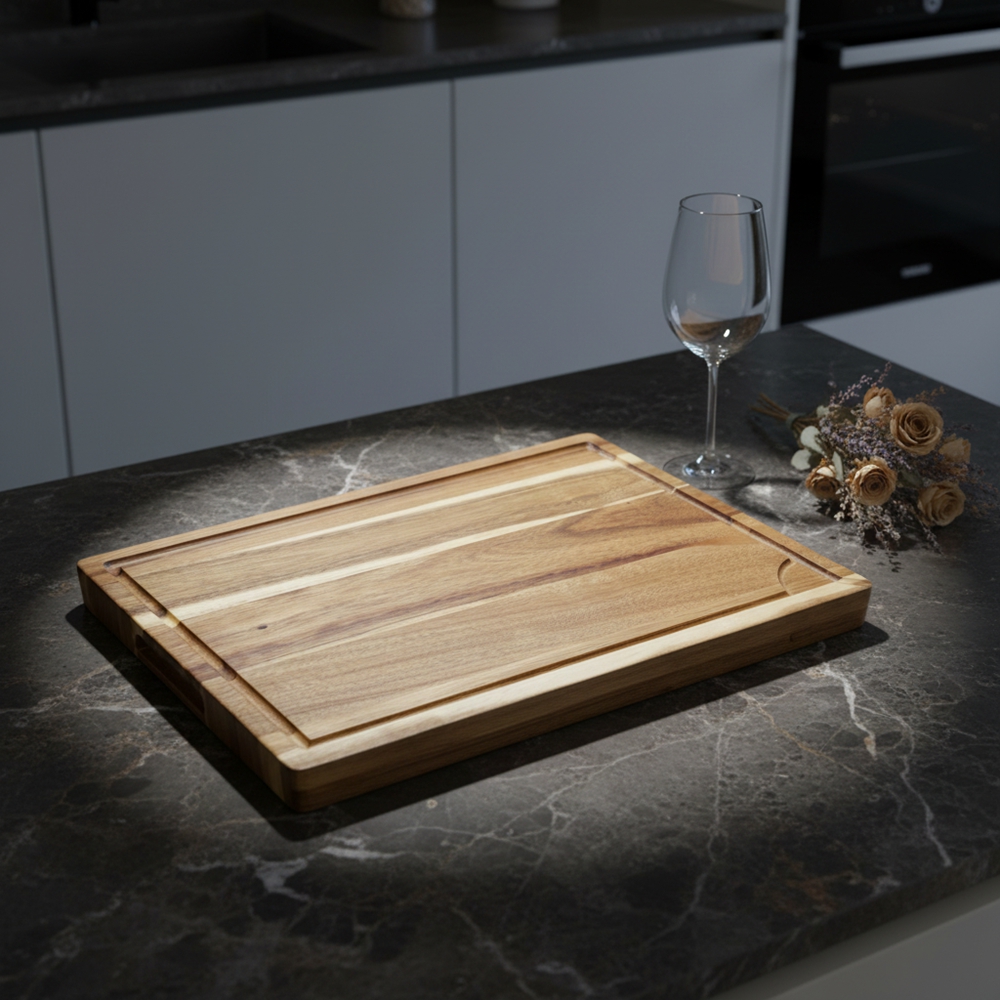

Acacia Wood Cutting Board with Juice Groove – Premium Natural Butcher Block for Kitchen Prep & Serving
- Premium acacia wood cutting board with juice groove. Durable butcher block design perfect for chopping, slicing, and serving.
Acacia is a dense hardwood widely used for premium kitchenware. It is known for its rich natural grain, beautiful color variations, and excellent durability.
Unlike bamboo, every acacia board has a unique appearance, making it popular in premium home décor and gift markets.
Advantages
- Beautiful natural wood grain
- High hardness
- Premium appearance
- Long service life
- Excellent moisture resistance
Durability Comparison
Both materials are highly durable, but they perform differently over time.
Bamboo
Bamboo is engineered by compressing multiple layers together. This structure provides excellent dimensional stability and helps reduce warping under normal kitchen use.
However, poor-quality bamboo boards may crack if manufactured with low-quality bamboo or insufficient drying.
Acacia
Acacia is naturally dense and highly resistant to impact. Its solid wood structure provides outstanding durability, especially for heavy daily use.
Because it is natural hardwood, slight movement caused by humidity changes is normal.
Winner: Slight advantage to Acacia for long-term heavy-duty durability.
Knife Friendliness
Many buyers assume a harder cutting board is always better, but that isn’t necessarily true.
A cutting board should protect both itself and your knives.
Bamboo is slightly harder than many traditional hardwoods, meaning it may dull knives a little faster over years of heavy use.
Acacia generally provides a slightly softer cutting experience while still offering excellent durability.
For most households, the difference is minimal when quality kitchen knives are maintained properly.
Winner: Acacia
Sustainability
This is where bamboo has a significant advantage.
Bamboo reaches maturity in approximately 3–5 years, while acacia trees generally require 15–25 years before harvesting.
Because bamboo regenerates from its root system after harvesting, it requires no replanting and absorbs large amounts of carbon dioxide during growth.
For brands focused on sustainability, bamboo is often the preferred choice.
Winner: Bamboo
Appearance
Appearance often depends on the target market.
Bamboo
- Light color
- Modern look
- Clean and uniform
- Minimal grain variation
Acacia
- Rich brown tones
- Distinctive natural grain
- Every board is unique
- Premium handcrafted appearance
Luxury kitchen brands often choose acacia because of its elegant visual appeal.
Winner: Acacia
Maintenance
Both materials require similar care.
To maximize lifespan:
- Wash by hand only.
- Dry immediately after cleaning.
- Do not soak in water.
- Oil regularly with food-grade mineral oil.
- Avoid dishwashers.
Proper maintenance can extend the life of either material for many years.
Cost Comparison
Manufacturing costs vary depending on wood grade, thickness, and construction.
Generally:
| Material | Relative Cost |
|---|---|
| Bamboo | Lower |
| Acacia | Higher |
Bamboo offers a more cost-effective solution for large-volume OEM production because of its abundant raw material supply and efficient manufacturing process.
Acacia’s higher material cost is often justified by its premium appearance and perceived value.
Which Material Is Better for Brands?
The answer depends on your positioning.
Choose bamboo if you want:
- Eco-friendly products
- Competitive pricing
- Consistent appearance
- Large-volume production
- Sustainable branding
Choose acacia if you want:
- Premium product positioning
- Luxury appearance
- Higher retail pricing
- Unique natural grain
- Gift-focused collections
Frequently Asked Questions
Is bamboo harder than acacia?
Bamboo is generally very hard because of its dense fiber structure, but hardness varies by species and manufacturing process.
Which cutting board lasts longer?
With proper care, both bamboo and acacia cutting boards can last for many years.
Is bamboo more environmentally friendly?
Yes. Bamboo grows much faster than hardwood trees and regenerates naturally after harvesting.
Which material is better for OEM projects?
Both materials are suitable for OEM manufacturing. Bamboo is typically preferred for high-volume, cost-effective production, while acacia is often selected for premium product lines.
Final Thoughts
Both bamboo and acacia are excellent materials for cutting boards, but they serve different purposes.
If sustainability, affordability, and manufacturing consistency are your priorities, bamboo is an outstanding choice. If your focus is premium aesthetics and luxury positioning, acacia offers exceptional visual appeal and long-term durability.
For kitchenware brands, the best material ultimately depends on your target customers, pricing strategy, and brand positioning.
Looking for a reliable OEM bamboo kitchenware manufacturer? Contact Pureliving Creations for customized solutions.