

When choosing an acacia wood cutting board, most people naturally focus on the wood itself. Acacia is well known for its natural grain, attractive color variations, durability, and suitability for kitchenware.
But good wood is only the starting point.
The manufacturing process plays an equally important role in determining the quality of the finished cutting board. Among the different production steps, sanding is one of the details that should never be overlooked.

From Good Wood to a Quality Cutting Board
After the acacia wood is cut and shaped, the surface may still have small rough areas or unevenness. Careful sanding helps refine the surface and prepare the board for its final finish.
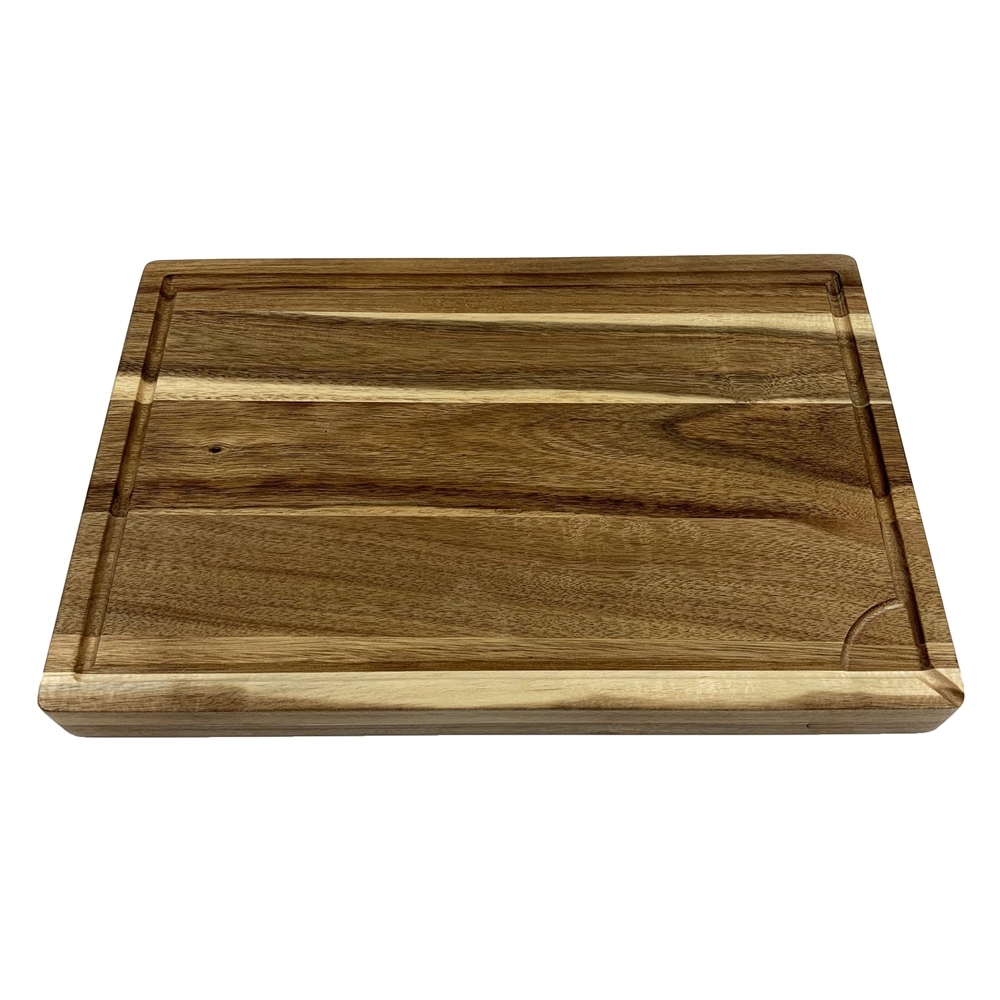
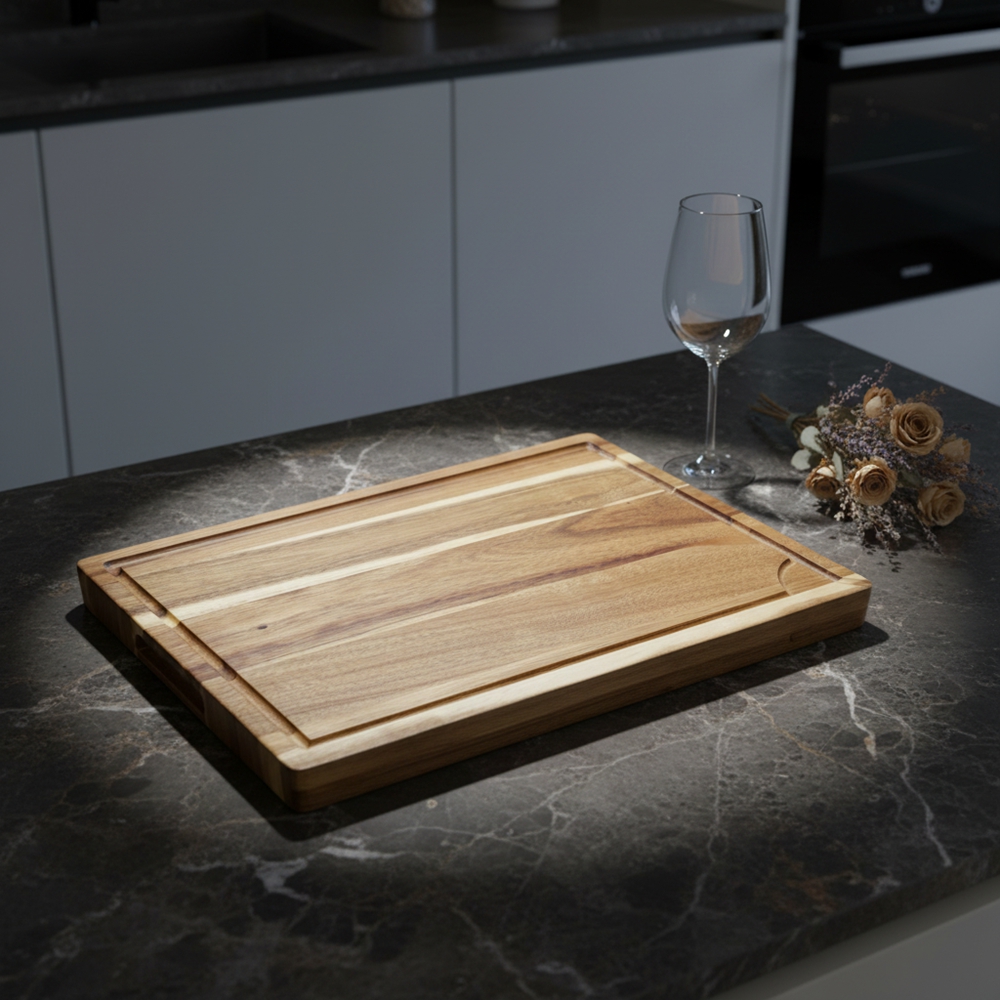
For a finished example, you can view our acacia wood cutting board with juice groove for retail and private label projects.
A properly sanded cutting board should have:
- A smooth and even surface
- Soft, comfortable edges
- Fewer rough areas or sharp transitions
- A more refined overall appearance
- A better feel when handled
These details may seem small, but they make a noticeable difference when customers actually use the product.
Sanding Is More Than Making the Surface Smooth
For us, sanding is not simply a step to make the product look better.
It is part of the quality of the product itself.
The worker needs to pay attention to the entire surface, edges, corners, and transitions of the board. Too little sanding can leave the surface rough, while inconsistent sanding can affect the appearance and feel of the finished product.
This is why careful workmanship matters even for a process that may not be obvious once the product is completed.
From Craftsmanship to the Finished Product
The video shows one of our workers carefully sanding an acacia wood cutting board during production.
The finished product may look simple, but behind that finished appearance are multiple steps of material selection, cutting, shaping, sanding, finishing, and quality inspection.
Good material provides the foundation. Good craftsmanship brings out its value.
For acacia wood kitchenware, we believe that paying attention to these details is what helps turn a good piece of wood into a high-quality finished product.
Quality Is Built Step by Step
A cutting board is a simple kitchen product, but producing a consistently high-quality product requires attention to every stage.
From the selection of acacia wood to the final sanding and inspection, every step contributes to the finished result.
Because in manufacturing, quality is not created at the final inspection. It is built into the product throughout the entire process.